
Why Do Voices Become Hoarse?
Vocal Nodules, Vocal Hygiene, and What Singers Should Know
For many singers, the voice is not just an instrument — it is part of our identity. When the voice suddenly becomes hoarse, breathy, or unstable, it can feel worrying and frustrating.
As vocal coaches, one of the most common questions we hear in singing lessons is:
“Why does my voice feel hoarse sometimes?”
Another surprisingly common question is:
“Why do some smokers seem to sing perfectly fine while others struggle with their voice?”
In this article, we will explore what hoarseness is, how vocal nodules can develop, and how singers can take care of their voices through good vocal hygiene.
What Is Hoarseness?
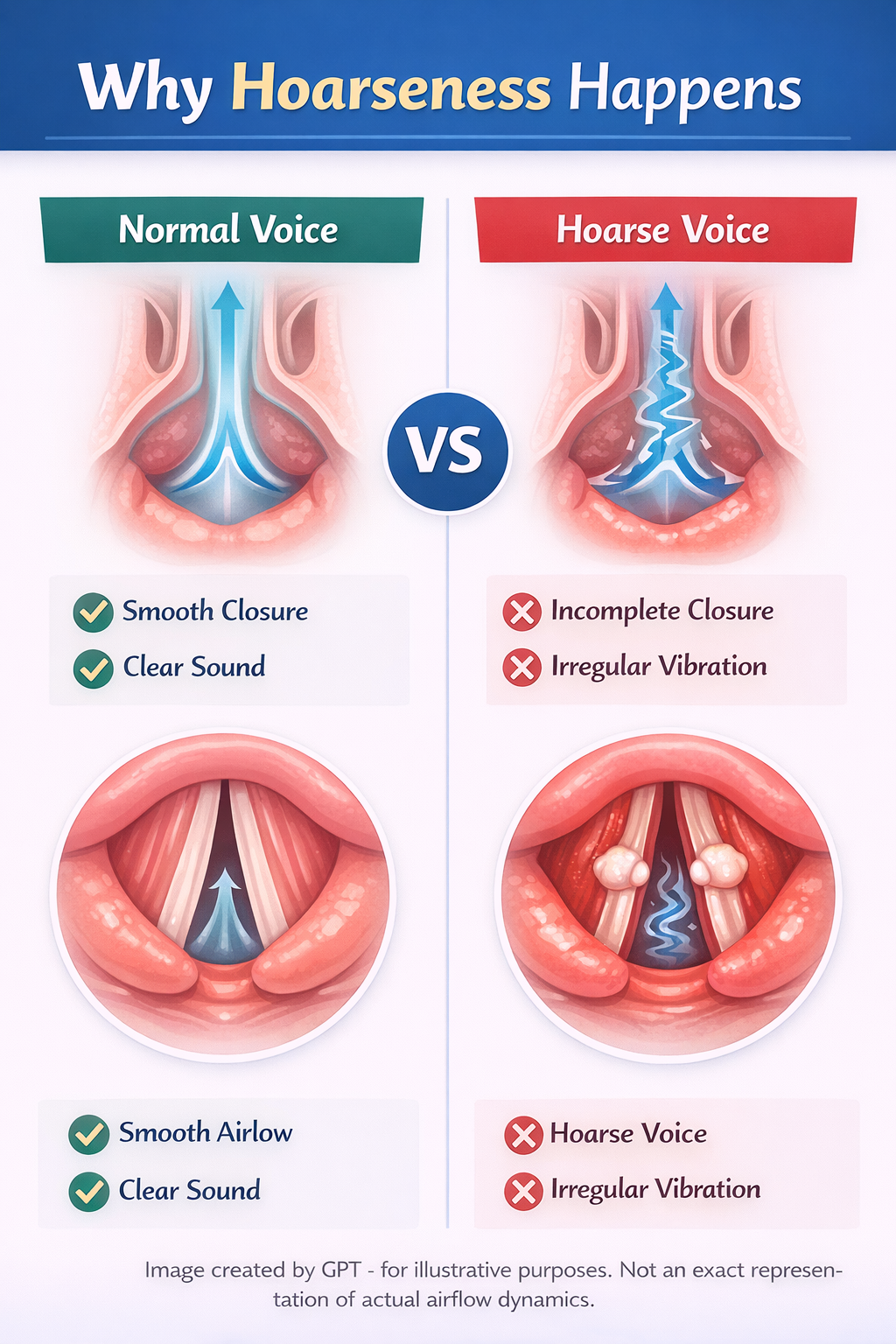
Hoarseness refers to a change in the quality of the voice, often described as:
rough or raspy
breathy
weak or strained
unstable with voice cracks
This happens when the vocal folds (often called vocal cords) do not vibrate smoothly.
Healthy vocal folds come together evenly and vibrate efficiently when air passes through them. This vibration creates a clear and resonant sound.
However, when the vocal folds become irritated, swollen, or injured, they may not close properly, allowing air to escape and producing the hoarse sound we hear.
What Are Vocal Nodules?
One possible cause of persistent hoarseness is vocal nodules.
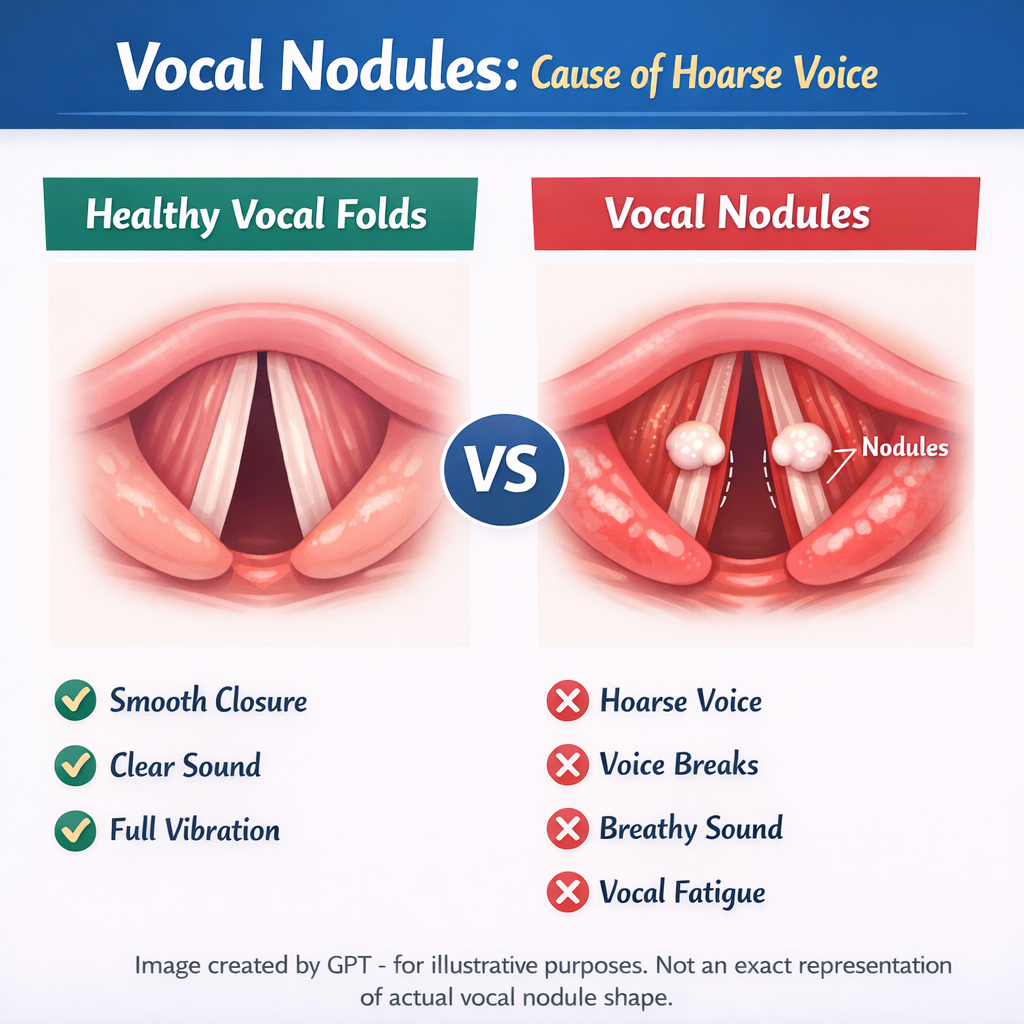
Vocal nodules are small callus-like growths that form on the vocal folds due to repeated vocal strain. They typically develop in pairs on both vocal folds at the point where the folds collide most during phonation.
In simple terms, vocal nodules are similar to calluses on the hands. When the vocal folds experience repeated friction — for example through excessive shouting, pushing the voice, or singing with tension — the tissue gradually thickens as a protective response.
When nodules develop, the vocal folds cannot close completely. This incomplete closure often leads to:
breathy tone
vocal fatigue
reduced vocal range
difficulty sustaining notes
frequent voice breaks
Many singers describe the sensation as if air is leaking through the voice.
The good news is that vocal nodules are often treatable through voice therapy, vocal rest, and healthy vocal technique, especially when addressed early.
Why Do Some Smokers Still Sing Well?
This question often surprises people. If smoking is harmful to the voice, why do some smokers appear to sing well?
There are several possible explanations.
1. Individual differences in vocal tissue
Every voice is different. Some people naturally have more resilient vocal fold tissue, which may tolerate irritation longer before symptoms appear.
However, this does not mean smoking is harmless — it simply means the damage may take longer to become noticeable.
2. Good vocal technique
A singer with efficient technique — including good breath support, balanced resonance, and minimal vocal tension — may be able to sing relatively well even with unhealthy habits.
In some cases, technique can temporarily compensate for physical strain.
3. The “husky voice” effect
Smoking can cause swelling and thickening of the vocal fold tissue. While this is not healthy, it can sometimes create a rough or husky vocal quality that listeners find stylistically appealing.
However, this type of sound is usually a sign of chronic irritation, not optimal vocal function.
4. Long-term effects still occur
Even if a singer sounds fine now, smoking increases the risk of:
chronic inflammation
vocal fatigue
vocal fold lesions
reduced vocal range
long-term voice damage
In other words, the absence of symptoms does not mean the voice is unaffected.
5 Vocal Hygiene Tips for Singers
Just like athletes care for their bodies, singers should care for their vocal health. Good vocal hygiene helps maintain a clear, flexible, and resilient voice.
Here are five simple but important tips.
1. Stay hydrated
Hydration is essential for healthy vocal folds. Drinking sufficient water helps keep the vocal fold tissue well lubricated and flexible.
Most singers benefit from drinking water regularly throughout the day, especially during periods of heavy voice use.
2. Avoid pushing or straining the voice
Singing or speaking with excessive force can lead to vocal fatigue and injury.
Try to avoid:
shouting
yelling across rooms
pushing high notes with excessive tension
Healthy singing relies on efficient breath support and resonance, not force.
3. Rest your voice when needed
The voice, like any muscle system, needs time to recover.
If you notice:
hoarseness
vocal fatigue
discomfort while speaking
it may be helpful to reduce voice use temporarily and allow the vocal folds to rest.
4. Maintain a healthy environment for your voice
Dry environments can irritate the vocal folds. Humidity helps maintain a healthy vocal tract.
Some singers find that using a steamed towel, or a humidifier especially during sleep can support vocal comfort.
5. Avoid irritants
Certain substances can irritate the vocal folds, including:
cigarette smoke
excessive alcohol
strong chemical fumes
Reducing exposure to these irritants can help protect vocal health.

When Should Singers Seek Help?
Occasional hoarseness can happen to anyone. However, if hoarseness lasts more than two weeks, it may be helpful to consult a voice specialist or ENT doctor.
A vocal coach can also help singers develop healthy technique and efficient vocal habits that reduce the risk of strain.
At The Vocal Studio, we emphasise a holistic approach to singing that includes not only technique and musical expression, but also vocal health and long-term voice care.
Because a healthy voice is the foundation for expressive singing.